
Genetics can feel complicated.
Genetics 101
What are DNA, Genes, and Chromosomes?
DNA is the material inside your cells that carries the instructions your body needs to grow, develop, and function.
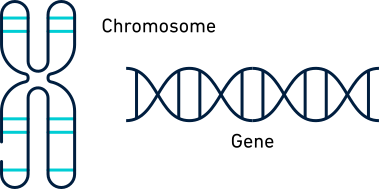
Genes are pieces of DNA that contain instructions for how your body grows and works. Each gene has a specific job and helps determine your traits, such as eye color, and can also affect your health.
Genes are organized into chromosomes. Most people have 46 chromosomes, arranged in 23 pairs. One chromosome in each pair usually comes from each biological parent. This is why some traits and health conditions can run in families.
A change in a gene is called a variant (sometimes called a mutation). Most variants do not affect health. Some variants may:
- Cause or raise the chance of a health condition
- Affect how the body grows or works
- Be passed to children
- Have no known effect
- Have an effect that is not yet understood
What Is Genetic Testing?
Genetic testing looks for changes in your DNA, genes, or chromosomes. These changes may help explain a health concern or show whether you have a higher chance of developing certain conditions.
Some tests look at one gene. Others look at many genes or large parts of your DNA. There is no single genetic test that can find every genetic condition. The right test depends on your health, family history, and reason for testing.
Some laboratory tests may also look at proteins, enzymes, or other substances in the body. These tests may help find conditions that affect how the body processes food or makes energy. Although these tests do not look at DNA, information from this testing can help identify genetic causes of health conditions.
This information is for education only. It does not replace medical advice. Talk with your healthcare provider about your health, testing choices, and results.
Why Testing Is Offered
Why Might I Need Genetic Testing?
Your healthcare provider may offer genetic testing for many reasons.
To help explain a health concern:
- Testing may help find a genetic reason for symptoms, differences in development, conditions present at birth, or other health concerns.
To learn about future health risks:
- Testing may show whether you have a higher chance of developing certain conditions, even if you do not have symptoms now.
To plan a pregnancy:
- Testing may show whether you or your reproductive partner carry a genetic change that could be passed to a child.
During pregnancy:
- Prenatal testing may provide information about the health or development of a pregnancy.
To help care for a baby or child:
- Testing may help explain serious illness, developmental concerns, seizures, birth differences, or other health problems.
To understand cancer risk:
- Some tests look for inherited gene changes that may raise the chance of certain cancers. Testing may also provide information about how to guide care for cancer.
To test for a change found in the family:
- If a genetic change has already been found in a family member, a more focused test may look for that specific change in other family members.
This information is for education only. It does not replace medical advice. Talk with your healthcare provider about your health, testing choices, and results.
Types of Genetic Tests
What Types of Genetic Tests Are Available?
Don’t see the test you’re looking for? Talk with your provider about the test they recommended and whether more information is available.
Whole Genome Sequencing
- Whole Genome Sequencing, also called WGS, looks across most of a person’s DNA. It may be used when many different genetic causes are possible or when earlier testing did not provide an answer.
Whole Exome Sequencing
- Whole Exome Sequencing, also called WES, looks at the parts of genes that provide instructions for making proteins (exons). Changes in these parts of genes are more likely to cause changes to health. This looks at less DNA than Whole Genome Sequencing. It may be used when a person’s health concerns could be caused by changes in many different genes.
Gene panels
- A gene panel looks at a group of genes linked to a certain health concern. For example, a panel may focus on epilepsy, connective tissue conditions, immune conditions, or neurological conditions.
Single-gene or focused testing
- This testing looks at one gene or a specific genetic change within a gene. It may be useful when:
- A certain condition is strongly suspected
- A genetic change was already found in the family
- Earlier testing found a result that needs to be confirmed
Chromosomal microarray
- A chromosomal microarray, sometimes called CMA, looks for missing or extra pieces of DNA. These changes may affect one gene, many genes, or part of a chromosome.
Chromosome testing
- Chromosome testing looks at the number and structure of chromosomes. Chromosomes are packages that hold DNA.
Carrier screening
- Carrier screening can show whether a person carries a genetic change that may be passed to a child. A carrier generally does not have health issues associated with that genetic condition but may have a child with the condition if the other biological parent also carries a change in the same gene. Some conditions generally only affect male children.
Prenatal and reproductive testing
- These tests may provide information before or during pregnancy. They may look for inherited conditions, chromosome changes, or other genetic causes of health concerns.
Mitochondrial testing
- Mitochondria help cells make energy. Mitochondrial testing looks for changes that may affect how the body makes or uses energy.
Biochemical and metabolic testing
- These tests may measure proteins, enzymes, or other substances in blood, urine, or another sample. Results may help identify conditions that affect the way the body processes nutrients or produces energy.
Cancer-related testing
- Hereditary cancer testing looks for inherited changes that may raise a person’s chance of developing certain cancers. Separate testing may be performed on tumor cells to help guide cancer care.
Familial variant testing
- Familial variant testing looks to see if someone else in the family has the same variant that may be associated with a disease. Sometimes this testing is done by a family member to see if they have the same variant that has been identified in their family and may be at risk of having the same disease. Other times, Baylor Genetics may request that family members be tested to help interpret the results of another family member.
How Is Genetic Testing Done?
Your healthcare provider will choose the test and sample type based on the reason for testing.
A sample may include:

Blood

Saliva, also called spit

Cells collected from inside the cheek or gum line (buccal swab)

Prenatal samples
Your sample is sent to a laboratory. The laboratory studies the sample and prepares a report. Your healthcare provider will review the results with you and talk about possible next steps.
Sometimes samples from biological parents or other relatives are also tested. Comparing family members may help the laboratory better understand genetic findings.
For more information on sample collection, CLICK HERE.
This information is for education only. It does not replace medical advice. Talk with your healthcare provider about your health, testing choices, and results.
Benefits and Limits of Testing
What Are Possible Benefits?
Genetic testing may help you and your healthcare team:
Find an answer
- A result may explain the cause of a health concern or confirm a diagnosis.
Make a care plan
- Some results may help guide screening, treatment, or other medical care.
Avoid unnecessary testing
- A clear result may reduce the need for additional tests. This depends on the health issues present and results from testing.
Understand future health risks
- A result may show whether you have a higher chance of developing a health condition.
Plan for a pregnancy
- Testing may provide information about the chance of passing a genetic condition to a child.
Help family members
- Because biological family members share DNA, a result may provide useful information for relatives. Family members may choose to speak with their own healthcare providers about testing.
Connect with support
- A diagnosis may help you find specialists, support groups, research opportunities, or other resources.
Important: Not every benefit applies to every person. The result may not change your medical care.
What Are Possible Limits?
Genetic testing can provide useful information, but it also has limits.
A result may not provide an answer
- Testing may not find the cause of a health concern. A negative result does not always mean that a genetic cause is not present. No single genetic test can find every possible type of genetic change.
A result may be uncertain
- A test may find a genetic change that is not well understood. This is often called a variant of uncertain significance, or VUS. An uncertain result usually does not confirm or rule out a diagnosis.
Testing may have costs
- Your cost may depend on the test, your insurance plan, and your eligibility for financial assistance. Ask about possible costs before testing.
Knowledge can change
- Genetic science continues to grow. A result that is uncertain today may be better understood later. It may be helpful to check in with your provider periodically to see if the understanding of results from testing have changed.
Testing cannot predict everything
- A genetic result may show an increased chance of a condition, but it may not show:
- Whether the condition will happen
- When it may begin
- How serious it may be
- Which symptoms a person may have
- Even for members of the same family that have the same genetic results, if and how the condition affects each of them may vary.
- A positive result does not always mean a person will develop a condition, and a negative result does not always remove all risk.
What Else Should I Consider Before Testing?
Before testing, take a moment to consider how results may affect you and your family.
Testing may find unexpected information
- A result may provide information that is not related to the main reason for testing. These are called secondary or incidental findings. Testing involving several relatives may also provide unexpected information about biological relationships.
Results may affect family members
- A result may suggest that biological relatives could have the same genetic change. You may need to think about whether and how to share the result with your family.
Results may cause worry
- Some people may feel worried or unsure after receiving a result. A healthcare provider or genetic counselor can help explain what the result does and does not mean.
This information is for education only. It does not replace medical advice. Talk with your healthcare provider about your health, testing choices, and results.
Understanding Results
What Kinds of Results Might I Receive?
The words used in your report will depend on the test.
 Positive
The test found a genetic change that may explain a health concern, increase the risk of a health concern in the future, and/or could be passed to a child.
 Negative
The test did not find a reportable genetic change. This does not rule out every genetic condition.
 Variant of Uncertain Significance/VUS
The test found a change, but there is not enough information to know whether it affects health. In some cases, testing the patient’s parents or other family members may help us understand if the VUS causes disease, and this testing may be offered free-of-charge. As our understanding of genetics improves over time, whether these changes cause disease or not may become known.
ACMG Secondary Finding
This is optional testing on Whole Genome Sequencing (WGS) or Whole Exome Sequencing (WES). The American College of Medical Genetics and Genomics (ACMG) recommends reporting disease-causing variants in certain genes that cause health issues but that might not be related to current health concerns. Learn More.
Incidental Finding
Some broad tests may find information that is not related to the original reason for testing. These findings can help guide care in the future. Whether these findings are reported depends on the test and choices made during the consent process. This is optional testing depending on the type of test being performed. Learn More.
Your results should be reviewed with your healthcare provider.
What Could My Result Mean for My Family?
Biological relatives share some of the same DNA. If testing finds a genetic change, relatives may also have that change.
A result could matter to:
- Biological parents
- Children
- Siblings
- Other biological relatives
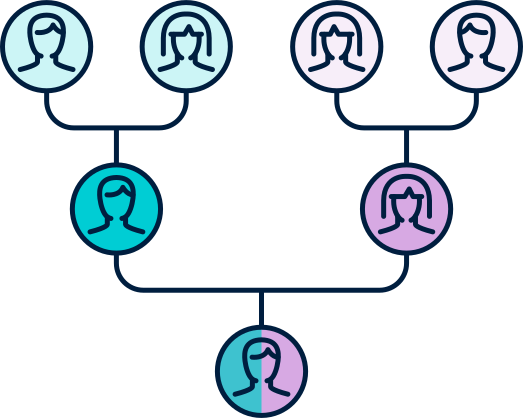
This does not mean every relative needs the same test. Each person should speak with a healthcare provider about personal health history, family history, and testing options.
By providing family members with information, you enable them to make informed and educated decisions about their health. You decide how and when to share your health information. The best way to help your family members talk with their healthcare team is to give them a copy of your test results. Your healthcare provider or genetic counselor can help you plan how to talk with family members.
This information is for education only. It does not replace medical advice. Talk with your healthcare provider about your health, testing choices, and results.
Understanding Your Options
Who Can Help Me Understand My Options?
Your healthcare provider can explain why testing is being considered and how a result may affect your care.
A genetic counselor is trained in genetics and counseling patients on complex health information. A genetic counselor can help you:
- Review your personal and family health history
- Understand different testing choices
- Think about benefits, risks, and limits
- Prepare for possible results
- Understand your report
- Decide how to share information with family
Genetic counseling before testing can help make sure the right person and the right test have been selected. Counseling after testing can help explain the results.
Genetic Counseling Through Baylor Genetics
Does Baylor Genetics offer genetic counseling after I receive my results?
Yes. Start by contacting the healthcare provider who ordered your test. Your provider may offer genetic counseling or refer you to another service.
Baylor Genetics also works with Genome Medical, a telehealth genetic counseling service. This service may be available to people in the United States who receive a positive or uncertain result from a qualifying Baylor Genetics test.
Does Baylor Genetics offer genetic counseling before testing?
No. Baylor Genetics does not provide genetic counseling before testing. Your healthcare provider can refer you to a genetic counselor. You can also use the National Society of Genetic Counselors online search tool to find a counselor for an in-person or telehealth visit.
Find a genetic counselor: https://findageneticcounselor.nsgc.org/
How do I qualify for genetic counseling through Baylor Genetics?
You may qualify for counseling through Genome Medical if:
- You received a qualifying Baylor Genetics test. Qualifying tests include: whole genome sequencing, whole exome sequencing, a genetic panel, and mitochondrial tests
- Your result was positive or uncertain
- Your healthcare provider referred you for genetic counseling
Will I have to pay for genetic counseling?
Most insurance plans cover genetic counseling. Genome Medical will review your coverage to determine if they are an in-network provider and discuss your benefits if available. If Genome Medical is not an in-network provider and you reside in the US, Baylor Genetics may be able to provide this service to you at no additional out-of-pocket cost.
Online Resources
There are several different resources and online platforms that can help you connect with individuals or families who may have similar diagnoses. Some conditions may have a Facebook group where people can connect with one another. Other conditions may have their own organization or registry with their own website. Some of the most common resources that we direct families to are listed below:
- https://rarediseases.org/
- https://rarechromo.org/
- https://everylifefoundation.org/
- https://geneticalliance.org/
- https://newbornscreening.hrsa.gov/
- https://www.cdc.gov/newbornscreening/
- https://medlineplus.gov/genetics/
- https://www.facingourrisk.org/
- https://www.cancer.gov/
What Questions Should I Ask?
Before testing, you may want to ask your provider:
- Why is this test being offered?
- What conditions will the test look for?
- What will the test not look for?
- What sample is needed?
- Could the test find unexpected information?
- What types of results could I receive?
- How could the result affect my care?
- Could the result matter to my family?
- How long might results take?
- What might I have to pay?
- Will insurance authorization be needed?
- Who will explain my result?
- What happens if the result is uncertain?
- Could the test be reviewed again in the future?
- How will my sample and information be used and protected?
Every person’s health and family story is different. A healthcare provider can help you decide whether genetic testing is right for you.
This information is for education only. It does not replace medical advice. Talk with your healthcare provider about your health, testing choices, and results.
About This Website
This website provides general information and support. It does not replace advice from your healthcare provider.
You cannot provide consent, check the status of your test, or view your test results here.
Contact your healthcare provider with questions about why testing was recommended, your care, or what your test results may mean.