
This guide helps you get ready to talk with your healthcare provider about genetic testing. It explains the information your provider will review with you before testing so you can make informed choices.
How to use this guide
Select the test your provider would like to order.
This guide does not replace the consent discussion with your provider. Your provider is responsible for explaining the benefits, risks, limits, and testing options, and for answering your questions before testing.
Whole Exome Sequencing (WES) or Whole Genome Sequencing (WGS)
Your provider (a doctor, genetic counselor, or other trained professional) may recommend a genetic test to help find a cause for your, or your family members, health issues. This guide explains what the test looks for, the kinds of results you could get, and what your provider may discuss with you before testing.
Download WES-WGS Consent Form
While your provider may use a different format to discuss consent, this document contains the same information covered during the consent process.
WES and WGS are advanced genetic tests that look for changes in a person’s DNA that may explain current health concerns or genetic conditions. DNA is the genetic material passed down from both parents.
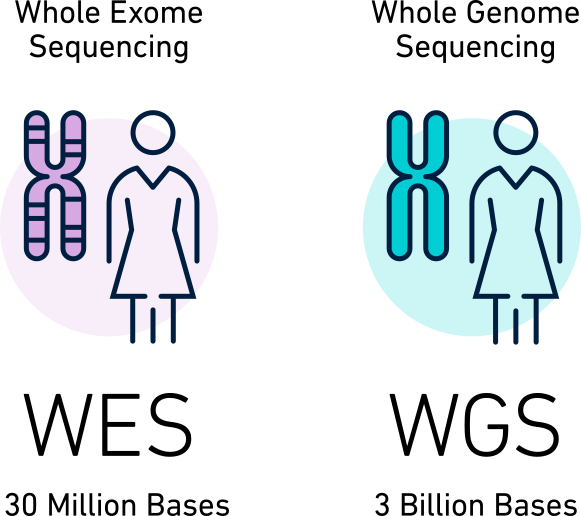
- Whole Exome Sequencing (WES) examines the parts of genes that provide instructions for making proteins.
- Whole Genome Sequencing (WGS) examines nearly all of your DNA, including areas outside of genes.
- These tests may identify variants (genetic changes) that help explain health conditions affecting you or your family.
- Sometimes testing may include one or more family members to help better understand the results.
Good to know: Even if testing finds the genetic cause of a condition, it may not change treatment or management. Talk with your provider about what this test can and cannot tell you.
There are several types of results you may receive:
 Positive:
A variant related to you or your family members’ health issue (or a future risk) was found. Disease-causing variants are also called pathogenic variants.
 Negative:
No variant was found related to you or your family members’ health issue or future risk.
 Variant of Uncertain Significance (VUS):
A change was found, but its effect on health isn't known yet. More testing may be needed for you or your family.
Optional Results
Some results are optional. In addition to looking for the genetic cause of you or your family members’ health concerns, WES and WGS may identify other genetic findings that could be important for your health. Your provider may ask if you would like to receive these optional results before testing begins. Consider your preferences carefully and discuss the available options, as some findings may have implications for your future health, healthcare decisions, or family members.
- ACMG (American College of Medical Genetics and Genomics) Secondary Findings: Variants in certain genes that are associated with conditions selected by ACMG where medical screening or treatment may help reduce health risks. This option is generally available for the patient being tested and any family members participating in the testing process.
The ACMG list mainly includes genes linked to:
- Inherited cancer risks, such as hereditary breast, ovarian, colon, and other cancers.
- Genes linked to hereditary heart conditions with potential for screening, treatment, or prevention.
- Other serious inherited conditions where medical screening, preventive care, or treatment can help improve health outcomes.
- Incidental Findings: Disease-causing variants unrelated to the reason for testing. Unlike secondary findings, which come from a specific list of genes that are checked on purpose, incidental findings are unexpected results found while looking for the cause of a health concern. These findings may involve genes linked to a variety of genetic conditions that could be important for medical care. This option is generally available for the patient being tested but is not an option for any family members participating in the testing process.
- Genes with No Known Disease Association: Variants found in genes that are not currently known to cause disease. These findings may help researchers learn more in the future but do not currently affect medical care. This option is generally only available for the patient being tested for tests ordered where both parents also participate in the testing process (trio or quad test orders).
Important: By default, variants related to certain adult-onset neurologic conditions are not reported unless specifically requested by your provider.
Before consenting to testing, talk with your provider about the risks, benefits, and alternatives to testing.
Your results may:
- Help identify a cause for a current health condition.
- Show an increased chance of developing a health condition in the future.
- Show an increased chance of having a child with a genetic condition.
- Provide information that may affect other family members.
- Lead to additional testing for you or your relatives.
Keep in mind:
- Not everyone with the same genetic variant is affected in the same way.
- A genetic finding may not predict how severe a condition will be or how it will respond to treatment.
A few important things to keep in mind:
- A negative result does not rule out a health issue. Our understanding of genes changes over time, and every test has limits to what it can find.
- Certain factors can lead to incorrect results, such as mislabeled samples, incorrect order information, or rare lab errors.
- More sample may be needed if the first one isn’t enough to finish testing.
- If more than one family member is tested, we need to know how you are related. In rare cases, the test may show family members are not related the way they thought. If this happens, we may call your provider.
- If you need to cancel testing after your sample is sent, see Baylor Genetics’ Test Cancellation Policy.
Who Can See Your Results?
- Results are released only to: a licensed healthcare provider, those you name in writing, you (or your personal representative), and those allowed by law.
- You can request your results, or your raw data, in writing.
Your genetic information is protected: Federal laws help stop health insurers and employers from treating you unfairly because of your results. They also stop others from sharing your results without your permission.
How are my test results and personal information protected?
Your privacy is important to us. Baylor Genetics follows federal privacy laws, including the Health Insurance Portability and Accountability Act (HIPAA), to help protect your health information.
We only share your information when it is allowed by law or needed to support your care.
Please see detailed information regarding our privacy practices here: HIPAA Notice of Privacy Policies – Baylor Genetics
What happens to your sample?
- Samples are stored based on Baylor Genetics’ retention policy. After testing, a de-identified sample may be used for test development, quality assurance, and training.
- Samples aren’t returned unless requested before testing.
- Variants may be submitted to public databases (like ClinVar) that help improve testing for everyone. Limited clinical information may be shared; in rare cases this could make identification possible.
Can my information be used for research?
- Research participation is your choice.
- If you choose to participate, your deidentified information (removal of your name and other identifiers) or coded information (identifiers removed and substituted with a number) may be used for research internally and/or shared with third parties to advance health care.
- Research may help scientists and healthcare providers better understand genetic conditions and improve testing for future patients.
- While efforts are made to protect your privacy, there is a small risk that someone could identify you from shared genetic information.
Research is your choice: Your sample and data are used anonymously or coded for research only if you authorize it — and choosing not to participate does not affect your ability to be tested.
State-specific notes:
- New York residents have special rules about storing samples. We will keep your sample for no more than 60 days after we receive it, unless you check the box on the consent form, permitting us to keep it longer.
- Some states, such as Oregon, may have additional or different consent forms that should be used.
Good to know: You have the right to access your test results and can ask questions about how your information is used or shared.
By providing consent, you’re confirming that:
- You read and understand the information, and you agree to testing.
- Your provider explained the test and the possible results.
- You discussed the risks, benefits, and limitations of testing.
- You were told that genetic counseling is available and important, and you got info on how to reach a counselor.
- All your questions were answered, and you had time to decide.
A parent or legal representative can consent for a patient. They may need to show proof that they are allowed to consent.
- Why did you recommend whole exome or whole genome sequencing?
- What will a positive, negative or VUS result mean for my care or my family members’ care?
- Could my results affect my family members?
- Can I choose not to have my information used for research?
- Would meeting with a genetic counselor be helpful?
- What are the costs, and what if my insurance doesn’t cover the test?
Prenatal Whole Exome Sequencing (WES) or Whole Genome Sequencing (WGS)
Your provider (a doctor, genetic counselor, or other trained professional) may recommend a genetic test to help identify a possible genetic cause of a health condition, evaluate genetic risks, or learn more about your pregnancy. This guide explains what the test looks for, the kinds of results you could get, and what your provider may discuss with you before testing.
WES and WGS are advanced genetic tests that look for changes in a person’s DNA that may explain current health concerns or genetic conditions. DNA is the genetic material passed down from both parents.
- Whole Exome Sequencing (WES) examines the parts of genes that provide instructions for making proteins.
- Whole Genome Sequencing (WGS) examines nearly all of your DNA, including areas outside of genes.
- These tests may identify variants (genetic changes) that help explain health conditions affecting you or your family.
- Sometimes testing may include one or more family members to help better understand the results.
Good to know: Even if testing finds the genetic cause of a condition, it may not change treatment or management. Talk with your provider about what this test can and cannot tell you.
There are several types of results you may receive:
 Positive:
A variant related to you or your family members’ health issue (or a future risk) was found. Disease-causing variants are also called pathogenic variants.
Negative:
No variant was found related to you or your family members’ health issue or future risk.
Variant of Uncertain Significance (VUS):
A change was found, but its effect on health isn't known yet. More testing may be needed for you or your family.
Optional Results
Some results are optional. In addition to looking for the genetic cause of you or your family members’ health concerns, WES and WGS may identify other genetic findings that could be important for your health. Your provider may ask if you would like to receive these optional results before testing begins. Consider your preferences carefully and discuss the available options, as some findings may have implications for your future health, healthcare decisions, or family members.
- ACMG (American College of Medical Genetics and Genomics) Secondary Findings: Variants in certain genes that are associated with conditions selected by ACMG where medical screening or treatment may help reduce health risks. This option is not available for the fetus being tested, but it is an option for any family member participating in the testing process.
The ACMG list mainly includes genes linked to:
- Inherited cancer risks, such as hereditary breast, ovarian, colon, and other cancers.
- Genes linked to hereditary heart conditions with potential for screening, treatment, or prevention.
- Other serious inherited conditions where medical screening, preventive care, or treatment can help improve health outcomes.
- Incidental Findings: Disease-causing variants unrelated to the reason for testing. Unlike secondary findings, which come from a specific list of genes that are checked on purpose, incidental findings are unexpected results found while looking for the cause of a health concern. These findings may involve genes linked to a variety of genetic conditions that could be important for medical care. These are automatically reported for the fetus being tested; however, they are not an option for any family members participating in the testing process.
Important: By default, variants related to certain adult-onset neurologic conditions are not reported unless specifically requested by your provider.
Before consenting to testing, talk with your provider about the risks, benefits, and alternatives to testing.
Your results may:
- Help identify a cause for a current health condition.
- Show an increased chance of developing a health condition in the future.
- Show an increased chance of having a child with a genetic condition.
- Provide information that may affect other family members.
- Lead to additional testing for you or your relatives.
Keep in mind:
- Not everyone with the same genetic variant is affected in the same way.
- A genetic finding may not predict how severe a condition will be or how it will respond to treatment.
A few important things to keep in mind:
- A negative result does not rule out a health issue. Our understanding of genes changes over time, and every test has limits to what it can find.
- Certain factors can lead to incorrect results, such as mislabeled samples, incorrect order information, or rare lab errors.
- More sample may be needed if the first one isn’t enough to finish testing.
- If more than one family member is tested, we need to know how you are related. In rare cases, the test may show family members are not related the way they thought. If this happens, we may call your provider.
- If you need to cancel testing after your sample is sent, see Baylor Genetics’ Test Cancellation Policy.
Who Can See Your Results?
- Results are released only to: a licensed healthcare provider, those you name in writing, you (or your personal representative), and those allowed by law.
- You can request your results, or your raw data, in writing.
Your genetic information is protected: Federal laws help stop health insurers and employers from treating you unfairly because of your results. They also stop others from sharing your results without your permission.
How are my test results and personal information protected:
Your privacy is important to us. Baylor Genetics follows federal privacy laws, including the Health Insurance Portability and Accountability Act (HIPAA), to help protect your health information.
We only share your information when it is allowed by law or needed to support your care.
Please see detailed information regarding our privacy practices here: HIPAA Notice of Privacy Policies – Baylor Genetics
What happens to your sample?
- Samples are stored based on Baylor Genetics’ retention policy. After testing, a de-identified sample may be used for test development, quality assurance, and training.
- Samples aren’t returned unless requested before testing.
- Variants may be submitted to public databases (like ClinVar) that help improve testing for everyone. Limited clinical information may be shared; in rare cases this could make identification possible.
Can my information be used for research?
- Research participation is your choice.
- If you choose to participate, your deidentified information (removal of your name and other identifiers) or coded information (identifiers removed and substituted with a number) may be used for research internally and/or shared with third parties to advance health care.
- Research may help scientists and healthcare providers better understand genetic conditions and improve testing for future patients.
- While efforts are made to protect your privacy, there is a small risk that someone could identify you from shared genetic information.
Research is your choice: Your sample and data are used anonymously or coded for research only if you authorize it — and choosing not to participate does not affect your ability to be tested.
State-specific notes:
- New York residents have special rules about storing samples. We will keep your sample for no more than 60 days after we receive it, unless you check the box on the consent form permitting us to keep it longer.
- Some states, such as Oregon, may have additional or different consent forms that should be used.
Good to know: You have the right to access your test results and can ask questions about how your information is used or shared.
By providing consent, you’re confirming that:
- You read and understand the information, and you agree to testing.
- Your provider explained the test and the possible results.
- You discussed the risks, benefits, and limitations of testing.
- You were told that genetic counseling is available and important, and you got info on how to reach a counselor.
- All your questions were answered, and you had time to decide.
A parent or legal representative can consent for a patient. They may need to show proof that they are allowed to consent.
- Why did you recommend prenatal whole exome or whole genome sequencing?
- What will a positive or negative result mean for my care or my family members’ care?
- Could my results affect my family members?
- Can I choose not to have my information used for research?
- Would meeting with a genetic counselor be helpful?
General Genetic Testing
Your provider (a doctor, genetic counselor, or other trained professional) may recommend a genetic test to help find a cause for your, or your family members, health issues. This guide explains what the test looks for, the kinds of results you could get, and what your provider may discuss with you before testing.
Download General Genetic Testing Consent Form
While your provider may use a different format to discuss consent, this document contains the same information covered during the consent process.
Your provider wants to find a cause for you or your family member’s health issues or to see if you or your family have a higher chance of a health issue in the future.
- A test may look for a known family variant, one gene, or several genes at once.
- What is a variant? DNA is the genetic material we get from our parents. A variant is a change in the DNA. Most changes don’t affect health, but some can cause disease or raise the chance of it.
Good to know: Even if the test finds the cause of a health issue, it may not tell us how to treat or manage it. Talk with your provider about what the test can and can’t do.
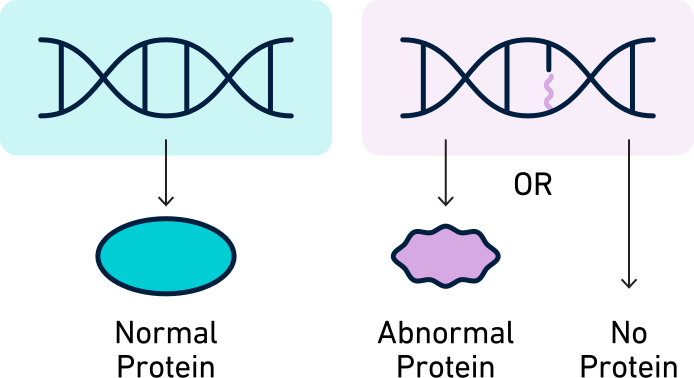
There are three main types of results you may receive:
Positive:
A variant related to you or your family members’ health issue (or a future risk) was found. Disease-causing variants are also called pathogenic variants.
Negative:
No variant was found related to you or your family members’ health issue or future risk.
Variant of Uncertain Significance (VUS):
A change was found, but its effect on health isn't known yet. More testing may be needed for you or your family.
A negative result does not completely rule out a health issue — see Considerations & Limitations below.
Before you consent to testing, talk with your provider about the risks, benefits, and alternatives to testing.
Results may:
- Help identify a cause for a current health condition.
- Show an increased chance of developing a health condition in the future.
- Show an increased chance of having a child with a genetic condition.
- Provide information that may affect other family members.
- Lead to additional testing for you or your relatives.
Keep in mind:
- Not everyone with the same genetic variant is affected in the same way.
- A genetic finding may not predict how severe a condition will be or how it will respond to treatment.
A few important things to keep in mind:
- A negative result does not rule out a health issue. Our understanding of genes changes over time, and every test has limits to what it can find.
- Certain factors can lead to incorrect results, such as mislabeled samples, incorrect order information, or rare lab errors.
- More sample may be needed if the first one isn’t enough to finish testing.
- If more than one family member is tested, we need to know how you are related. In rare cases, the test may show family members are not related the way they thought. If this happens, we may call your provider.
- If you need to cancel testing after your sample is sent, see Baylor Genetics’ Test Cancellation Policy.
Who Can See Your Results?
- Results are released only to: a licensed healthcare provider, those you name in writing, you (or your personal representative), and those allowed by law.
- You can request your results, or your raw data, in writing.
Your genetic information is protected: Federal laws help stop health insurers and employers from treating you unfairly because of your results. They also stop others from sharing your results without your permission.
How are my test results and personal information protected?
Your privacy is important to us. Baylor Genetics follows federal privacy laws, including the Health Insurance Portability and Accountability Act (HIPAA), to help protect your health information.
We only share your information when it is allowed by law or needed to support your care.
Please see detailed information regarding our privacy practices here: HIPAA Notice of Privacy Policies – Baylor Genetics
What happens to your sample?
- Samples are stored based on Baylor Genetics’ retention policy. After testing, a de-identified sample may be used for test development, quality assurance, and training.
- Samples aren’t returned unless requested before testing.
- Variants may be submitted to public databases (like ClinVar) that help improve testing for everyone. Limited clinical information may be shared; in rare cases this could make identification possible.
Can my information be used for research?
- Research participation is your choice.
- If you choose to participate, your deidentified information (removal of your name and other identifiers) or coded information (identifiers removed and substituted with a number) may be used for research internally and/or shared with third parties to advance health care.
- Research may help scientists and healthcare providers better understand genetic conditions and improve testing for future patients.
- While efforts are made to protect your privacy, there is a small risk that someone could identify you from shared genetic information.
Research is your choice: Your sample and data are used anonymously or coded for research only if you authorize it — and choosing not to participate does not affect your ability to be tested.
State-specific notes:
- New York residents have special rules about storing samples. We will keep your sample for no more than 60 days after we receive it, unless you check the box on the consent form, permitting us to keep it longer.
- Some states, such as Oregon, may have additional or different consent forms that should be used.
Good to know: You have the right to access your test results and can ask questions about how your information is used or shared.
By providing consent, you’re confirming that:
- You read and understand the information, and you agree to testing.
- Your provider explained the test and the possible results.
- You discussed the risks, benefits, and limitations of testing.
- You were told that genetic counseling is available and important, and you got info on how to reach a counselor.
- All your questions were answered, and you had time to decide.
A phttps://staging.baylorgenetics.com/patients/learn-about-genetic-testing#understanding-your-optionsarent or legal representative can consent for a patient. They may need to show proof that they are allowed to consent.
- Why did you recommend genetic testing?
- What will a positive, negative, or VUS result mean for my care or my family members’ care?
- Could my results affect my family members?
- Can I choose not to have my information used for research?
- Would meeting with a genetic counselor be helpful?
- What are the costs, and what if my insurance doesn’t cover the test?
Biochemical Testing
Your provider (a doctor, genetic counselor, or other trained professional) may recommend a test to help find a cause for your, or your family members, health issues. This guide explains what the test looks for, the kinds of results you could get, and what your provider may discuss with you before testing.
Download Biochemical Testing Consent Form
While your provider may use a different format to discuss consent, this document contains the same information covered during the consent process.
Your provider wants to find a cause for you or your family members’ health issues or to see if you or your family have a higher chance of a health issue in the future.
- What biochemical testing looks at: Instead of looking at a person’s DNA, this test can measure proteins or analytes, which are substances in your body. A change in the amount or function of these can signal a health issue.
- What are proteins and analytes? They are substances your body makes and uses. When there is too much, too little, or they do not work right, it can point to a health issue.
Good to know: Even if the test finds the cause of you or your family member’s health issue, it may not tell us how to treat or manage it. Talk with your provider about what the test can and can’t do.
There are two main types of results you may receive:
Positive:
A change was found that is related to you or your family members’ health issue, or that means you or your family member have a higher chance of a health issue in the future. This may be a change in the amount and/or function of proteins or analytes.
Negative:
No changes were found. The amount and function of proteins or analytes appear to be normal.
A negative result does not completely rule out a health issue — see Considerations & Limitations below.
Before consenting to testing, talk with your provider about the risks, benefits, and alternatives to testing.
Your results may:
- Help identify a cause for a current health condition.
- Show an increased chance of developing a health condition in the future.
- Show an increased chance of having a child with a genetic condition.
- Provide information that may affect other family members.
- Lead to additional testing for you or your relatives.
Keep in mind:
- Even when a change is found, it may not predict how a health issue will progress or improve with treatment.
- Family members with the same change may not be affected the same way.
A few important things to keep in mind:
- A negative result does not rule out a health issue.
- Certain factors can lead to incorrect results, such as mislabeled samples, incorrect order information, or rare lab errors.
- More sample may be needed if the first one isn’t enough to finish testing.
- If more than one family member is tested, we need to know how you are related. In rare cases, the test may show family members are not related the way they thought. If this happens, we may call your provider.
- If you need to cancel testing after your sample is sent, see Baylor Genetics’ Test Cancellation Policy.
Who Can See Your Results?
- Results are released only to: a licensed healthcare provider, those you name in writing, you (or your personal representative), and those allowed by law.
- You can request your results, or your raw data, in writing.
Your genetic information is protected: Federal laws help stop health insurers and employers from treating you unfairly because of your results. They also stop others from sharing your results without your permission.
How are my test results and personal information protected?
Your privacy is important to us. Baylor Genetics follows federal privacy laws, including the Health Insurance Portability and Accountability Act (HIPAA), to help protect your health information.
We only share your information when it is allowed by law or needed to support your care.
Please see detailed information regarding our privacy practices here: HIPAA Notice of Privacy Policies – Baylor Genetics
What happens to your sample?
- Samples are stored based on Baylor Genetics’ retention policy. After testing, a de-identified sample may be used for test development, quality assurance, and training.
- Samples aren’t returned unless requested before testing.
- Variants may be submitted to public databases (like ClinVar) that help improve testing for everyone. Limited clinical information may be shared; in rare cases this could make identification possible.
Can my information be used for research?
- Research participation is your choice.
- If you choose to participate, your deidentified information (removal of your name and other identifiers) or coded information (identifiers removed and substituted with a number) may be used for research internally and/or shared with third parties to advance health care.
- Research may help scientists and healthcare providers better understand genetic conditions and improve testing for future patients.
- While efforts are made to protect your privacy, there is a small risk that someone could identify you from shared genetic information.
Research is your choice: Your sample and data are used anonymously or coded for research only if you authorize it — and choosing not to participate does not affect your ability to be tested.
State-specific notes:
- New York residents have special rules about storing samples. We will keep your sample for no more than 60 days after we receive it, unless you check the box on the consent form, permitting us to keep it longer.
- Some states, such as Oregon, may have additional or different consent forms that should be used.
Good to know: You have the right to access your test results and can ask questions about how your information is used or shared.
By providing consent, you’re confirming that:
- You read and understand the information, and you agree to testing.
- Your provider explained the test and the possible results.
- You were told that genetic counseling is available and important, and you got info on how to reach a counselor.
- All your questions were answered, and you had time to decide.
A parent or legal representative can consent for a patient. They may need to show proof that they are allowed to consent.
- Why did you recommend biochemical testing?
- What will a positive or negative result mean for my care or my family members’ care?
- Could my results affect my family members?
- Would meeting with a genetic counselor be helpful?
- Can I choose not to have my information used for research?
- What are the costs, and what if my insurance doesn’t cover the test?
About This Website
This website provides general information and support. It does not replace advice from your healthcare provider.
You cannot provide consent, check the status of your test, or view your test results here.
Contact your healthcare provider with questions about why testing was recommended, your care, or what your test results may mean.