
Baylor Genetics
Metabolomic Assisted Pathway Screen
Comprehensive Metabolomic Testing to Inform Diagnosis of Inborn Errors of Metabolism
Characterize Heritable Metabolic Disorders for Patients with Unexplained Symptoms or Uncertain Genetic Results.
Many of these heritable metabolic conditions are treatable, and timely diagnosis can help prevent or reduce health complications.1
1 in 2,500
newborns have an inherited metabolic disorder.2
Many patients with inherited metabolic disorders, also known as Inborn Errors of Metabolism (IEM), can present with complex, overlapping metabolic and neurologic symptoms, such as developmental delay, intellectual disability, or seizures, making diagnosis challenging.
An accurate diagnosis can lead to effective therapies, diets, and even enzyme replacement for some IEMs.3
Early recognition of IEMs can significantly impact a patient’s care trajectory, yet current testing methods may lead to delayed care or missed diagnoses.
These challenges highlight the need for a more comprehensive approach that connects sequence data to real biochemical activity for actionable insights that guide care.

Routine Biochemical Testing
Targeted testing may require multiple metabolic panels to piece together a full picture

Genetic Testing
Genetic testing results may not align with or explain clinical presentation
Global MAPS® Can Bring Your Patients Closer to Answers
Global Metabolomic Assisted Pathway Screen (Global MAPS®) explores hundreds of metabolites across known and emerging pathways to bring functional clarity for some of these uncertain cases, connecting unexplained findings to meaningful diagnoses.
Identifies >700 metabolites associated with metabolic disorders.4
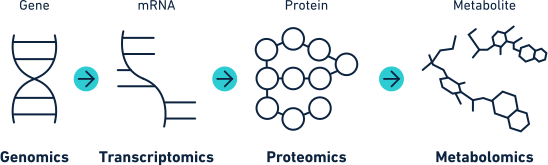
Metabolomics is the broad study of small metabolites produced from biochemical reactions in the body, capturing a real-time snapshot of metabolic health.2,5
Unlike traditional biochemical testing, which measures a select set of predefined metabolites, metabolomics surveys hundreds at once to reveal unexpected or atypical biochemical patterns that routine panels may miss.
When paired with genome or exome sequencing, Global MAPS® can show the functional impact of these genetic changes, showing how genetic variants may affect metabolic pathways and helping clarify findings that are uncertain or incomplete.5,6
The American Academy of Pediatrics recommends metabolic screening for children with global developmental delay and intellectual disability.1
Every patient’s diagnostic journey is unique. Global MAPS® may support providers at key decision points by bringing clarity when results are uncertain or incomplete.
Order Global MAPS® for patients with suspected metabolic or neurologic disease when:
- Clinical features suggest an IEM, but conventional biochemical testing is inconclusive or uninformative
- Sequencing results are unclear or uncertain and require functional context
- A broad metabolic panel is needed early in the diagnostic journey due to overlapping, non-specific clinical presentation
- Novel, emerging, or atypical metabolic pathways need to be explored
Common metabolic and neurologic features:7
- Developmental delay or regression
- Intellectual disability
- Abnormal MRI or metabolic findings
- Unexplained neurologic symptoms
- Hypotonia
- Failure to thrive
- Hypoglycemia
- Recurrent vomiting
Resources
Specimen Requirements
SAMPLE TYPE |
REQUIREMENTS |
SHIPPING CONDITIONS |
|---|---|---|
 Plasma |
Send 1–2 cc of plasma. Draw blood in an EDTA (purple top) tube(s) and separate plasma as soon as possible, freezing immediately. Store the specimen frozen at -20°C. Specimen may be stored frozen up to 7 days. |
Ship frozen sample in insulated container, with 3–5 lbs. dry ice, by overnight courier. |
 Urine |
Send 3–5 cc of a random urine. Do not add preservatives. Store the specimen frozen at -20°C. |
Ship frozen sample in insulated container, with 3–5 lbs. dry ice, by overnight courier. |
Test Name
Global MAPS® – Plasma
Global MAPS® – Urine
Code
4900
4901
Sample
EDTA Plasma
Urine
Specimen Requirements
SAMPLE TYPE |
REQUIREMENTS |
SHIPPING CONDITIONS |
|---|---|---|
Plasma |
Send 1–2 cc of plasma. Draw blood in an EDTA (purple top) tube(s) and separate plasma as soon as possible, freezing immediately. Store the specimen frozen at -20°C. Specimen may be stored frozen up to 7 days. |
Ship frozen sample in insulated container, with 3–5 lbs. dry ice, by overnight courier. |
Urine |
Send 3–5 cc of a random urine. Do not add preservatives. Store the specimen frozen at -20°C. |
Ship frozen sample in insulated container, with 3–5 lbs. dry ice, by overnight courier. |
Turnaround Time**
5-7 weeks
5-7 weeks
Key Features
Detects over 700 metabolites in a single test4
Captures data across known and novel pathways
Integrates into Baylor Genetics’ multimodal workflow (WGS/WES, RNA Sequencing [RNAseq], and Metabolomics)
Data & Reporting
Global MAPS® provides semi-quantitative results using Z-scores that compare analyte levels against a healthy reference population. Rather than presenting isolated values, Global MAPS® reports highlight meaningful patterns of biochemical change to support clinical interpretation.
In addition to Z-score findings, Global MAPS® organizes results into four reporting categories to help providers understand the potential clinical relevance:
1. Significantly altered analytes – Metabolites with Z-scores outside the expected range that may relate to the patient’s phenotype
2. Unusually present analytes – Rare metabolites detected in <5% of historical samples that may provide diagnostic clues
3. Unusually absent analytes – Metabolites typically present in >99% of samples but missing in this patient, suggesting potential pathway disruption
4. Analytes influenced by diet, supplements, or medications – Patterns that help distinguish true biochemical abnormalities from nutritional or treatment-related effects
Considerations and Limitations
Global MAPS® can detect metabolites that weigh from 75-1000 Da. Individual concentrations are not reported. Specific analytes will not automatically be reported; rather, analytes that altered, influenced, unusually present, or unusually absent are reported. Metabolomic testing cannot detect all genetic or biochemical conditions, including those with large molecule analytes. Interpretation depends on available knowledge of metabolic pathways and clinical context. Additional testing may be recommended for comprehensive evaluation. Results should always be interpreted in the context of the patient’s clinical presentation and other laboratory findings. Global MAPS® is not intended for use in acute metabolic crises.
Accreditations and Certifications
The tests described have been developed and their performance characteristics determined by the CLIA-certified and CAP-accredited laboratory performing the test. These tests are laboratory-developed tests (LDTs) and have not been cleared or approved by the U.S. Food and Drug Administration (FDA). These tests are not authorized for clinical testing in New York State. Clinical testing is performed in compliance with the Clinical Laboratory Improvement Amendments (CLIA) and the standards of the College of American Pathologists (CAP), ensuring high quality and reliability in laboratory practices. © 2025 Baylor Genetics, Inc. All Rights Reserved.
**Turnaround time can vary based on factors such as collection date, sample quality/quantity and completeness of patient information provided.
- Adenylosuccinate lyase deficiency
- AICA-ribosiduria (ATIC deficiency)
- Argininemia
- Argininosuccinic aciduria
- Aromatic L-amino acid decarboxylase deficiency
- β-Ureidopropionase deficiency
- Citrate transporter deficiency
- Citrin deficiency
- Citrullinemia
- Cobalamin biosynthesis disorders
- Creatine biosynthesis defects (GAMT & AGAT)
- DEGS1 deficiency
- Ethylmalonic encephalopathy
- GABA transaminase deficiency
- Galactosemia
- Glutaric acidemia type I
- Glycerol kinase deficiency
- Glycine encephalopathies
- Glycine N-methyltransferase deficiency
- Holocarboxylase synthetase deficiency
- Hyperornithinemia-hyperammonemia-homocitrullinuria (HHH) syndrome
- Hyperphenylalaninemia
- Isovaleric acidemia
- Kynurenine 3-monooxygenase (KMO) deficiency
- Lysinuric protein intolerance
- Maple syrup urine disease
- Medium chain acyl-CoA dehydrogenase (MCAD) deficiency
- Methylmalonic acidemia
- Mitochondrial neurogastrointestinal encephalopathy (MNGIE)
- MTHFR deficiency
- Ornithine transcarbamylase deficiency
- Orotic aciduria
- Peroxisome biogenesis disorders / Zellweger spectrum
- Phenylketonuria
- Primary carnitine deficiency
- Propionic acidemia
- Pyridoxine-dependent epilepsy
- Riboflavin transporter deficiency (SLC25A2)
- Ribose-5-phosphate isomerase deficiency
- Serine biosynthesis disorders
- Short chain acyl-CoA dehydrogenase (SCAD) deficiency
- Smith-Lemli-Opitz syndrome
- Spondyloepimetaphyseal dysplasia, Genevieve type
- Succinic semialdehyde dehydrogenase (SSADH) deficiency
- Thiamine transporter deficiency
- Transaldolase deficiency
- Transketolase deficiency
- Trimethyllysine hydroxylase epsilon deficiency
- Tyrosinemia type I
- Urocanase deficiency (benign condition)
- Very long chain acyl-CoA dehydrogenase (VLCAD) deficiency
- Xanthurenic aciduria (KYNU deficiency)
- 2-hydroxyglutaric acidemia (likely L-form)
- 3-hydroxy-3-methylglutaryl (HMG)-CoA lyase deficiency
- 3-hydroxyisobutyryl-CoA hydrolase deficiency (HIBCH)
- 3-methylcrotonyl-CoA carboxylase (3-MCC) deficiency
Note: The conditions listed here represent those for which Global MAPS® has been validated and confirmed. Because Global MAPS® is a comprehensive metabolic-screening platform, it may also detect additional conditions or metabolic signatures beyond those listed, but these have not yet undergone the same level of validation or confirmation. Interpretation of screening results should always be performed in the context of clinical findings and, when appropriate, follow-up diagnostic testing.
More Information
Global MAPS® adds functional biochemical evidence that can clarify uncertain or incomplete genetic findings.
Providers can send either EDTA plasma or urine. Additional specimen requirements can be found here.
Specimen Requirements
SAMPLE TYPE |
REQUIREMENTS |
SHIPPING CONDITIONS |
|---|---|---|
Plasma |
Send 1–2 cc of plasma. Draw blood in an EDTA (purple top) tube(s) and separate plasma as soon as possible, freezing immediately. Store the specimen frozen at -20°C. Specimen may be stored frozen up to 7 days. |
Ship frozen sample in insulated container, with 3–5 lbs. dry ice, by overnight courier. |
Urine |
Send 3–5 cc of a random urine. Do not add preservatives. Store the specimen frozen at -20°C. |
Ship frozen sample in insulated container, with 3–5 lbs. dry ice, by overnight courier. |
The typical turnaround time for Global MAPS® is 5-7 weeks. Please note that turnaround time can vary based on factors such as collection date, sample quality/quantity, and completeness of patient information provided.
The results for Global MAPS® are semi-quantitative and report analyte levels using z-scores that compare to a healthy control population, highlighting outliers and metabolic pathway patterns.
Traditional panels measure predefined markers; metabolomics surveys hundreds of metabolites across pathways, potentially revealing unanticipated metabolic changes.
Yes, unexplained metabolite patterns can identify new pathways or candidate genes for follow-up testing.
It can provide functional biochemical evidence to confirm whether a genetic variant impacts metabolism.
Functional testing (or a functional study) examines how a genetic variant affects a biological process. While genetic testing typically identifies variants, functional studies can show the real-world impact of these variants on pathways and physiology.
Specimen Requirements
SAMPLE TYPE |
REQUIREMENTS |
SHIPPING CONDITIONS |
|---|---|---|
Plasma |
Send 1–2 cc of plasma. Draw blood in an EDTA (purple top) tube(s) and separate plasma as soon as possible, freezing immediately. Store the specimen frozen at -20°C. Specimen may be stored frozen up to 7 days. |
Ship frozen sample in insulated container, with 3–5 lbs. dry ice, by overnight courier. |
Urine |
Send 3–5 cc of a random urine. Do not add preservatives. Store the specimen frozen at -20°C. |
Ship frozen sample in insulated container, with 3–5 lbs. dry ice, by overnight courier. |
1. PMID: 40545261
2. PMID: 29083820
3. PMID: 30600976
4. Internal Data
5. PMID: 40679463
6. PMID: 37036266
7. PMID: 7564553