Lainey’s Story: How Whole Genome Sequencing Turned Uncertainty into Answers
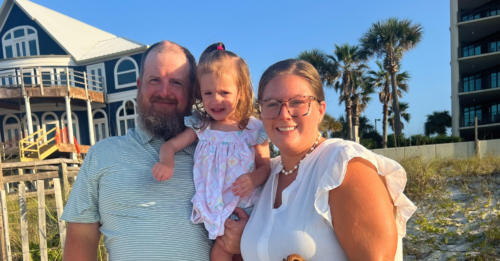
After over a year of delayed developmental milestones, Baylor Genetics’ Whole Genome Sequencing (WGS) provided important genomic insights that supported Lainey’s care journey, leading to tailored physical therapy and a plan for monitoring seizures.
- What test was used? Whole Genome Sequencing (WGS)
- Lainey’s result: de novo CYFIP2 variant, associated with Developmental and Epileptic Encephalopathy (DEE65)
- What changed? Access to specialized epilepsy care, tailored physical therapy, seizure monitoring, and connections with other families navigating rare forms of epilepsy
Developmental Delays, One After Another
In February 2024, Hannah and her husband welcomed a baby girl, Lainey. During pregnancy, Hannah’s prenatal screenings and tests were normal. Lainey was born happy and healthy.
After about two months, Hannah started noticing subtle developmental delays. First, Lainey had trouble turning her head, though her symptoms initially improved with time.
But on her first birthday, Lainey had difficulty sitting up on her own. At around 18 months old, she was able to sit up but could not crawl or walk.
At this point, Hannah was concerned. She couldn’t help but wonder about missing the next developmental milestone. Regression, or a loss of motor skills, was also on her mind.
Being a nurse herself, Hannah suspected that there may be an underlying cause of her daughter’s symptoms. And around the same time, she learned about Baylor Genetics’ comprehensive genetic testing.
Answers After a Single Test
Hannah met with her daughter’s pediatrician to talk about having Baylor Genetics’ Whole Genome Sequencing (WGS) done for Lainey. She agreed and ordered the test, along with family testing for Hannah, her husband, and their oldest daughter to determine if there may be a genetic cause contributing to Lainey’s condition.
Within two weeks, Lainey’s results revealed that she had a variant, or change, in the CYFIP2 gene which is associated with Developmental and Epileptic Encephalopathy (DEE65), a rare seizure disorder characterized by low muscle tone, developmental delays, and epilepsy1.
DEE65’s clinical presentation correlated closely with nearly all of Lainey’s symptoms.
When I got the results, they give you a detailed report of everything—the symptoms, the signs—and it matched her to a tee. I thought to myself, all of it makes sense now,” Hannah recalled.
The results also offered a glimpse of what her condition might look like in the coming months.
Facing an Ultra Rare Disease
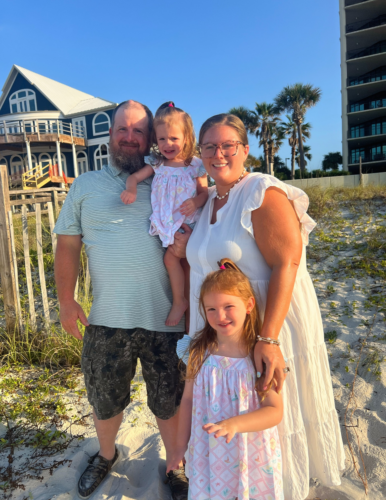
After receiving the results, Hannah and her husband met with a genetic counselor. They learned that Lainey’s variant can disrupt normal brain function and is de novo, meaning that it appeared spontaneously and was not inherited from Hannah nor her husband.
To their surprise, they also learned that, at that time, there were only 12 other individuals with Lainey’s condition in the United States. The first person with DEE65 was identified less than a decade ago, thanks to advancements in genomic sequencing.
When I found out what she had and how rare it was, I felt like it was something that a standard genetic test would not have tested for,” said Hannah.
Hannah and her husband were heartbroken but very grateful to have more information and a plan to keep Lainey’s development on track. There are currently no approved targeted treatments for DEE65, though supportive therapies such as physical therapy can help address developmental challenges.
Lainey’s experience demonstrates why early genetic testing can be so important. Identifying the biological cause of a child’s symptoms may help guide specialist referrals, inform monitoring plans, and connect families with therapies and resources sooner.
Close Monitoring and an Action Plan
After receiving her result, Lainey was referred to a pediatric epilepsy specialist and she underwent an electroencephalogram (EEG), a test used to measure electrical activity in the brain. The test confirmed that she was prone to a type of seizure called infantile spasms. An MRI showed no structural brain abnormalities.
“Out of the 12 cases, about 25% of children have not actively had seizures. So I was really, really hoping that she just had the developmental delays,” Hannah recalled. “But when we had our EEG, it did show that she had misfires, so we are on seizure precautions.”
Despite this, Hannah now knows exactly what to do and what to look for as Lainey gets older.
“Knowing this did put me at ease a little. Now we have diazepam on hand as a rescue medication in case she does have a seizure,” said Hannah.
An Optimistic Outlook
Hannah and her family have a different lifestyle than they pictured—specialist visits and two days of physical therapy per week—but they are grateful to have more insights, access to specialty care, and hope for their daughter’s future.
As scientific understanding continues to evolve, Lainey’s care team will continue to monitor her condition and may pursue WGS reanalysis in the future. New discoveries could provide additional insights and help guide her care over time.
Receiving the diagnosis also helped Hannah connect with other families navigating similar challenges. For parents of children with ultra-rare conditions, finding a community can be just as meaningful as finding an answer.
I’m very thankful because at least I know that now she can get the help she needs,” said Hannah. “But if I didn’t get that testing, I feel like I still wouldn’t know what she had—it would be a guessing game.”
Today, Lainey is two and a half years old, crawling and walking on her own. While her family continues to navigate the challenges of a rare disease, they are grateful to have answers, a care team, and a clearer path forward.
Is genome sequencing right for you or your patient?
If an infant or child has unexplained developmental delays, intellectual disability, seizures, or motor or mobility concerns, they might benefit from genetic testing.
Early genetic answers with WGS can lead to faster diagnoses, more informed medical decisions, and critical information needed for families to prepare for their child’s future. In some cases, genetic testing can even inform targeted therapies and clinical trial enrollment. Learn more about WGS testing.
References
1Ma R, Kim US, Chung Y, Kang HR, Zhang Y, Han K. Recent advances in CYFIP2-associated neurodevelopmental disorders: From human genetics to molecular mechanisms and mouse models. Brain Dev. 2025;47(1):104302. doi:10.1016/j.braindev.2024.104302